The main chemical limits
The International Olive Council trade standard and EU rules set the limits. These are the ones producers deal with most:
| Test | Extra virgin limit | What it tells you |
|---|---|---|
| Free acidity (as oleic acid) | 0.8% or less | Damage to the fruit before milling: bruising, waiting, pests or rot. |
| Peroxide value | 20 meq O2/kg or less | Early oxidation, from heat, light or air. |
| UV absorbance K232 | 2.50 or less | Oxidation that has already started. |
| UV absorbance K268 (K270) | 0.22 or less | Later oxidation, or traces of refined oil. |
| ΔK | 0.01 or less | Signs of refining. |
| Ethyl esters | 35 mg/kg or less | Fermented or poor-quality fruit. |
Acidity is not a taste
Free acidity cannot be tasted. A peppery, bitter oil can have very low acidity, and a mild oil can be close to the limit. Low acidity is a sign that healthy fruit was milled quickly, which is why the best producers often reach 0.2% to 0.3%.
The sensory test
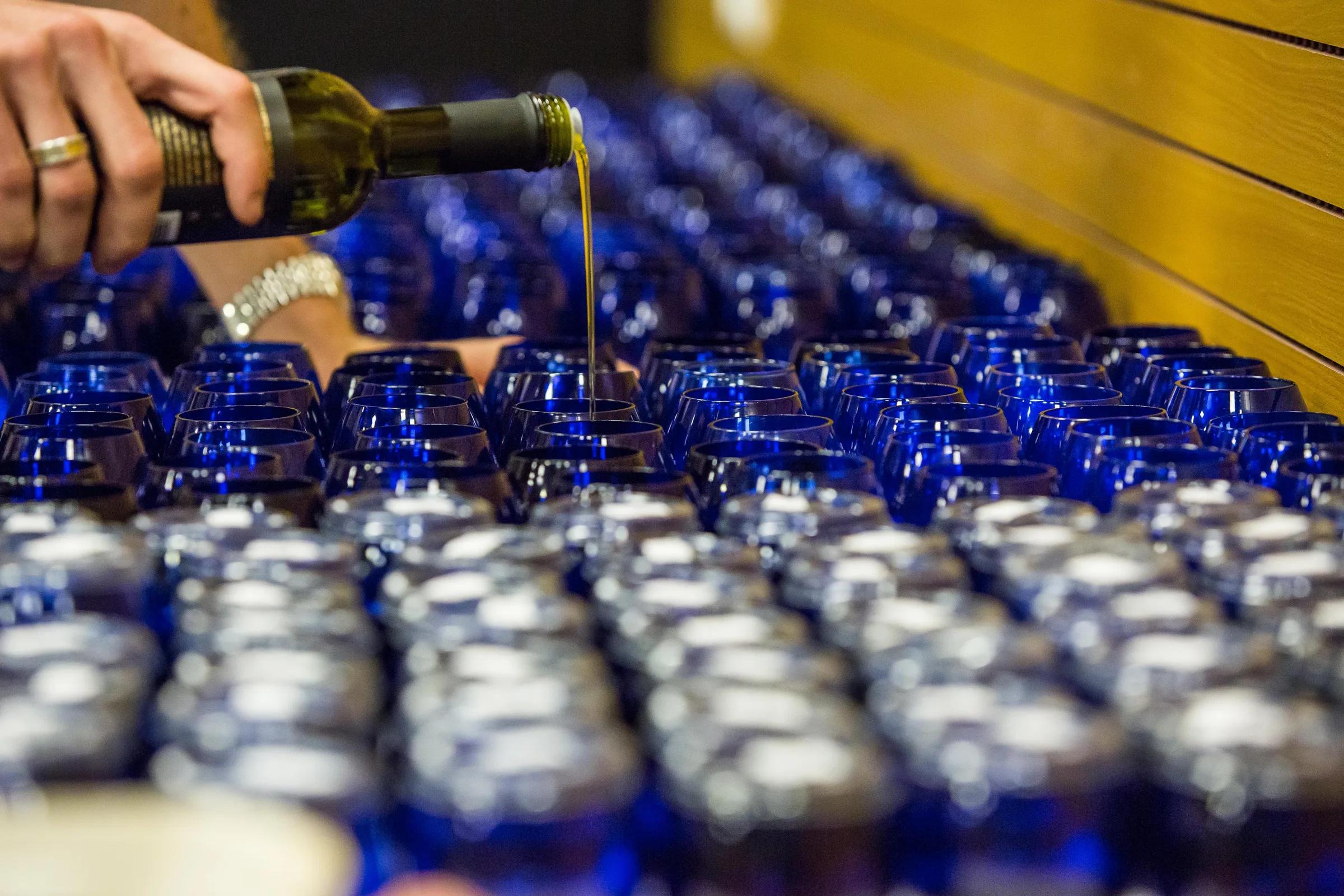
Chemistry is only half the grade. A trained panel tastes the oil under the official sensory method and rates its positive attributes (fruitiness, bitterness, pungency) and any defects. For extra virgin, the median of defects must be zero and the median of fruitiness above zero. An oil with even a light defect drops to virgin, whatever its lab results.
The defects that cost the grade
- Fusty or muddy sediment: fruit that fermented in heaps or bags before milling, or oil left too long on its sediment.
- Musty, humid or earthy: fruit that took on mold, often after being stored damp or picked from the ground.
- Winey or vinegary: fermentation that produced acetic acid and ethanol.
- Rancid: oxidation, from age, heat, light or air.
- Frostbitten olives (wet wood): fruit damaged by frost on the tree.
From grade to medal
Meeting the extra virgin limits is the starting line, not the finish. In a competition the panel looks beyond the grade: how intense and complex the fruitiness is, how bitterness and pungency balance it, and how long the flavor lasts. At Terraolivo every sample is tasted blind and scored out of 100.