What polyphenols are
Polyphenols (also called phenolic compounds or biophenols) are natural antioxidants that pass from the olive fruit into the oil during milling. Refining removes most of them, which is one reason they are a mark of extra virgin olive oil.
The ones producers hear about most are hydroxytyrosol and tyrosol, and the larger secoiridoids they come from: the aglycones of oleuropein and ligstroside, oleacein and oleocanthal. Oleocanthal is the compound behind the peppery sting at the back of the throat.
How much is high?
There is no single official scale, and results from different lab methods cannot be compared directly. As a rough guide for results measured by HPLC:
| Polyphenols (mg/kg) | What it usually means |
|---|---|
| Under 100 | Low. Usually a mild, ripe oil or an oil that has aged. |
| 100 to 250 | Moderate. Typical of many good extra virgin olive oils. |
| 250 and above | Enough for the EU health claim, if measured as hydroxytyrosol and its derivatives. |
| 500 and above | High. Usually clearly bitter and pungent, often from early harvest or intense cultivars. |
The EU health claim
Regulation (EU) No 432/2012 allows one health claim for olive oil polyphenols: "Olive oil polyphenols contribute to the protection of blood lipids from oxidative stress." It may be used only for olive oil that contains at least 5 mg of hydroxytyrosol and its derivatives (such as the oleuropein complex and tyrosol) per 20 g of oil, which is 250 mg/kg. The label must also say that the benefit comes from a daily intake of 20 g of olive oil.
The wording is fixed. Claims such as "high phenolic" or a number on the label are regulated differently in each market, so check the rules where you sell and keep the lab report for the lot.
How labs measure polyphenols
When you compare results, compare the same method, and note the date of the analysis: polyphenols fall as the oil ages.
- HPLC, using the International Olive Council method COI/T.20/Doc. No 29: measures individual compounds and is the method that fits the EU claim.
- NMR: measures specific compounds such as oleocanthal and oleacein.
- Total phenols by the Folin-Ciocalteu method: a quick colorimetric test. Useful to compare your own lots, but not comparable with HPLC results.
What raises polyphenols, from tree to bottle
- Cultivar: Coratina, Koroneiki and Picual are naturally high; Arbequina is naturally lower.
- Ripeness: green, early-harvest fruit gives far more polyphenols than ripe fruit, with less oil yield.
- Healthy fruit, milled fast: damaged fruit or fruit that waits before milling loses freshness and can develop defects.
- Malaxation: moderate temperature and controlled time keep aromas and polyphenols. Long, warm malaxation raises yield but costs quality.
- Less added water: two-phase decanters wash out fewer polyphenols than three-phase systems.
- Storage: cool, dark, full or inert-gas tanks and dark bottles slow the natural decline.
Bitterness, pungency and the tasting panel
In the official sensory method for virgin olive oils, fruitiness, bitterness and pungency are the three positive attributes. Polyphenols are a large part of the last two, so an oil rich in polyphenols usually tastes greener, more bitter and more peppery, and keeps its freshness longer.
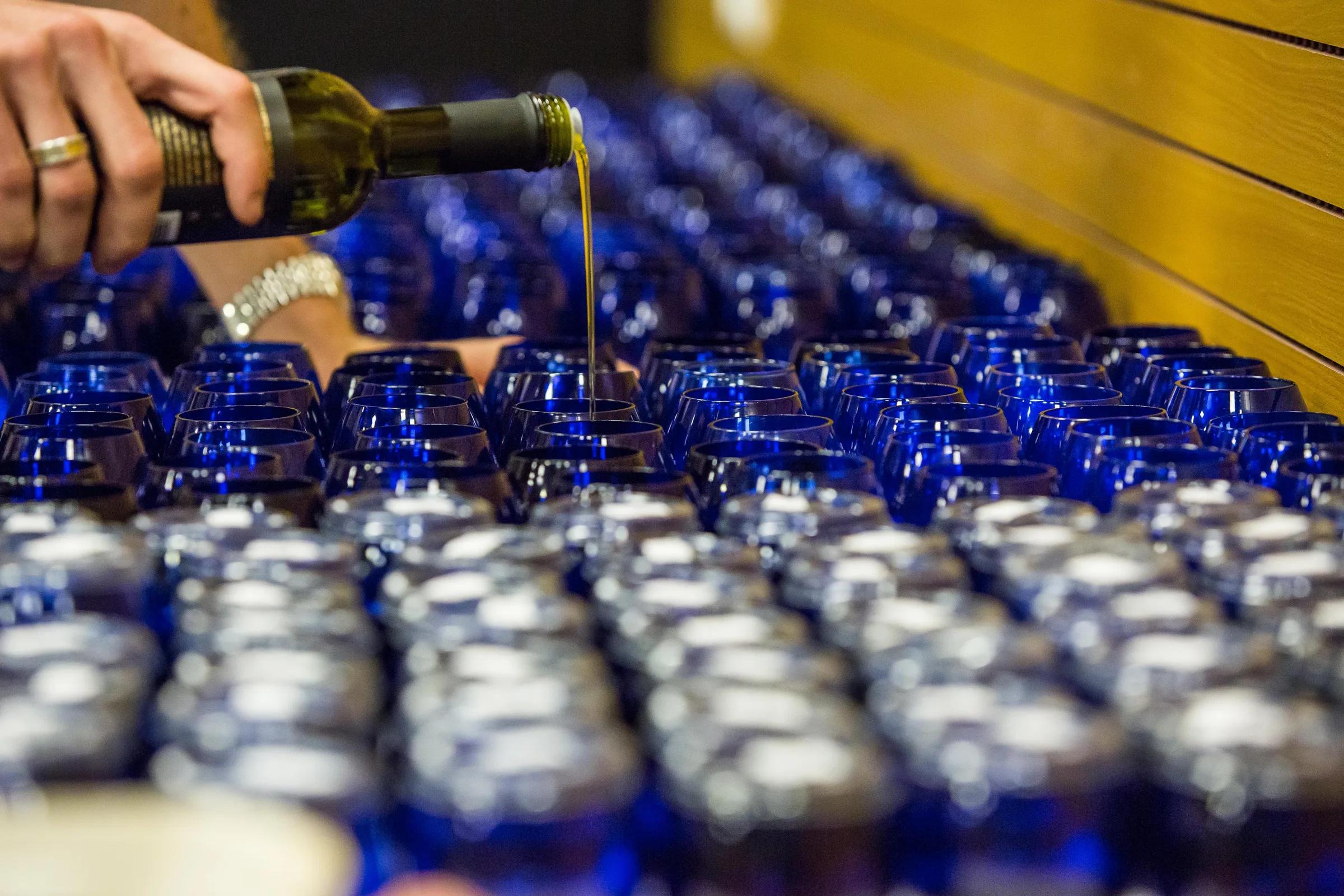
A tasting panel does not read a lab report. At Terraolivo every sample is coded and tasted blind, then scored out of 100. What the glass shows is fruitiness, bitterness and pungency in balance, complexity and persistence, and the absence of defects. A very high-phenolic oil that is harsh and unbalanced does not automatically outscore a balanced one.